
The Do's and Don'ts of Kitchen Remodeling in South Florida
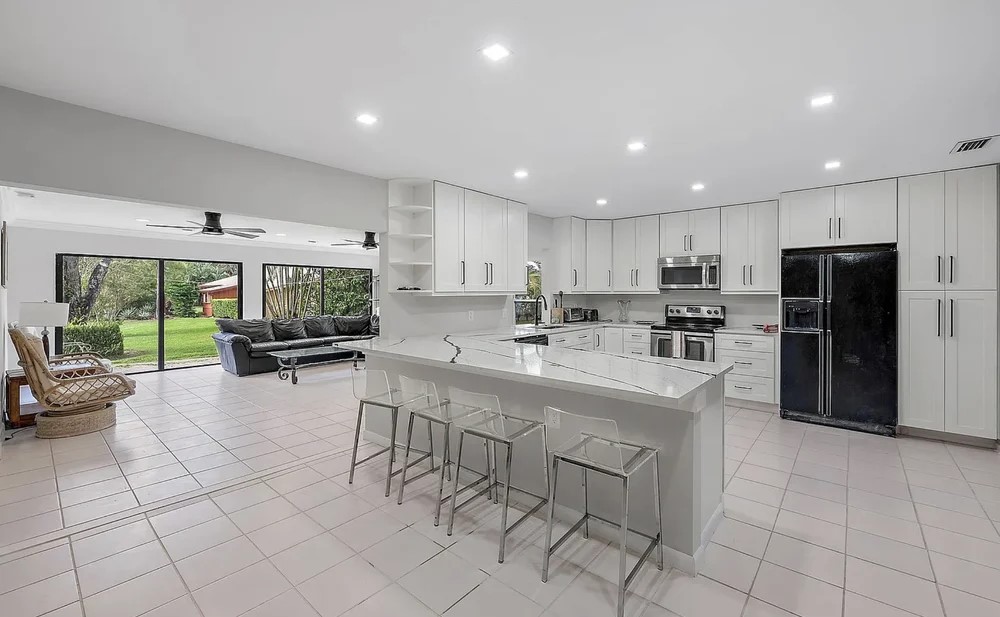
South Florida kitchens face a climate unlike anywhere else in the country — relentless humidity, salt air, intense heat, and the occasional hurricane season. Before you swing a sledgehammer or pick out cabinet hardware, here’s what every homeowner in Miami-Dade, Broward, and Palm Beach County needs to know.
DO: Choose Climate-Smart Materials
✓ Use moisture-resistant cabinetry South Florida’s average humidity hovers around 75–80%. Opt for plywood or marine-grade cabinet boxes instead of particleboard, which swells and warps in high-moisture environments. Thermofoil and solid wood with a proper sealant are also excellent choices.
✓ Choose porcelain tile or quartz countertops Both materials resist heat, humidity, and UV exposure — all daily realities in South Florida. Quartz is non-porous, resisting mold and bacteria that thrive in humid kitchens. Large-format porcelain tiles also reduce grout lines where moisture can penetrate.
✓ Go with stainless steel or marine-grade hardware If your kitchen is near the coast — even 10–15 miles inland — salt air accelerates corrosion on standard metal hardware. Stainless steel (grade 316) or powder-coated aluminum hardware holds up beautifully in coastal conditions.
DON’T: Cut Corners on Moisture & Ventilation
✗ Don’t skip a high-CFM range hood Cooking steam compounds South Florida’s existing humidity. A range hood rated at 400 CFM or higher is essential — not optional. Recirculating hoods that simply filter and push air back in are not adequate for the region’s climate. Duct your ventilation outside.
✗ Don’t use hardwood flooring in your kitchen Despite its beauty, solid hardwood expands and contracts dramatically in Florida’s humidity swings. Engineered hardwood is a better compromise, but porcelain tile or luxury vinyl plank (LVP) is the gold standard for Florida kitchens.
✗ Don’t ignore mold-resistant drywall behind the backsplash Behind your beautiful tile, the wall matters too. Standard drywall is a mold magnet in high-humidity kitchens. Use cement board or moisture-resistant “green board” drywall behind all wet areas, even if you’re not near the sink.
DO: Plan Around Permits & Local Codes
✓ Pull the proper permits — always South Florida counties, particularly Miami-Dade, have strict building codes shaped by hurricane preparedness. Any structural changes, electrical upgrades, or plumbing relocation require permits. Unpermitted work will haunt you at resale and can invalidate your homeowner’s insurance.
✓ Hire a contractor licensed in your specific county Florida contractor licenses are state-issued, but each county has its own additional requirements. Verify that your contractor holds an active license in Miami-Dade, Broward, or Palm Beach County through the Florida DBPR website before signing anything.
✓ Plan your remodel timing around hurricane season Hurricane season runs June through November. If your remodel involves opening walls or removing the roof for a kitchen addition, aim to complete those phases before June. Material shipments can also be delayed during active storm periods, pushing your timeline back significantly.
A South Florida Reality Check
Material costs in South Florida typically run 15–25% higher than the national average, driven by high demand, insurance requirements, and the premium on hurricane-rated materials. Budget $30,000–$80,000+ for a mid-to-full kitchen remodel in the tri-county area, and always add a 15% contingency buffer. Surprises — especially moisture damage uncovered behind old cabinets — are extremely common in older Florida homes.
DON’T: Fight the Florida Aesthetic — Embrace It
✗ Don’t design a dark, closed-off kitchen South Florida buyers and residents overwhelmingly favor open, light-filled kitchens that flow into living spaces. Dark upper cabinets and closed layouts feel claustrophobic in the tropical heat. Open shelving, glass-front cabinets, and light color palettes (whites, sage greens, soft blues) are your allies.
✗ Don’t over-air condition without insulating properly Many homeowners crank the AC to compensate for poor insulation, especially in older CBS (concrete block structure) homes. Improper insulation around kitchen walls leads to condensation inside walls, accelerating mold growth. Spray foam insulation is the preferred solution in Florida’s climate zone.
✗ Don’t neglect impact-resistant windows in kitchen additions If your remodel involves adding a window or expanding the kitchen footprint, Florida building code in most South Florida counties now requires impact-resistant windows or hurricane shutters. These add cost upfront but lower your insurance premium and eliminate shutter installation every storm season.
DO: Invest in Energy-Efficient Upgrades
✓ Upgrade to ENERGY STAR appliances Florida Power & Light and other South Florida utilities frequently offer rebates on ENERGY STAR-certified refrigerators, dishwashers, and range hoods. In a climate where your refrigerator works overtime against ambient heat, an efficient model pays for itself faster than anywhere else in the country.
✓ Add under-cabinet LED lighting LED lighting generates significantly less heat than fluorescent or incandescent alternatives — a meaningful advantage when your AC is already working hard. Under-cabinet LEDs also improve visibility, add ambiance, and consume a fraction of the energy of traditional task lighting.
✓ Install a whole-house water filtration system at the kitchen South Florida’s water is treated but often tastes heavily of chlorine. A point-of-use reverse osmosis system under the sink or a whole-house filtration system protects your appliances from mineral deposits and gives you clean drinking water on demand.
The Bottom Line
A South Florida kitchen remodel is an investment in comfort, resilience, and home value. The region’s unique climate demands smarter material choices, careful permit compliance, and contractors who understand local codes. Get those fundamentals right, and your new kitchen will stand up to decades of tropical living — beautifully. Saturn Construction is ready to turn your ideas into reality.
© 2026 Sunshine Home Guide · South Florida Living